


Keynote speakers
Elisa Morgera
 Mon 2 Nov, 14:00–14:45
Human rights as essential information, analysis and methodology for effective and fair climate science, action and resilience
The understanding of the human rights impacts of climate change, as well as of the negative human rights impacts of some climate response measures, is grounded in the lived experiences of the individuals, groups and peoples most disproportionately affected. Not only this understanding is essential for the prevention of foreseeable environmental and human rights harm in specific locations and for the most vulnerable, but it also offers indispensable insights for the protection of human rights globally and across generations in the context of climate change. In turn, the protection of human rights can help advancing and operationalizing climate science to support transformative decision-making at all levels, at the nexus with nature, water, food and health.
Elisa Morgera is UN Special Rapporteur on climate Change and Human Rights. She is a Professor of International Law and Sustainability at Durham University (UK) and Professor in International and EU Environmental Law at the University of Eastern Finland. Previously, she worked with the United Nations Food and Agriculture Organization in Italy and the United Nations Development Programme in Barbados; and continued to collaborate with the United Nations and other international organizations as consultant and independent expert. She advised governments and civil society in Africa, Asia, Europe, Latin America, the Caribbean, and the South Pacific.
Marco Marani
 Tue 3 Nov. 14:00-14:45
The future ain’t what it used to be: extreme event estimation for water science and engineering under climate change
Extreme events are involved in questions that are central to water science and engineering as well as to adaptation to a changing climate. Extreme rainfall, floods, and droughts are familiar examples of phenomena that require accurate estimates of event magnitudes and frequency of occurrence that are most often based on short records. For example, in designing risk-reduction infrastructures, we frequently need to estimate the probability of unprecedented events, which are not even contained in the observational record. In climate change studies we need to estimate the probability of future extremes based on short climate model runs (order of 10 years in the case of high-resolution Convection Permitting Models). In all these cases we need statistical models that make effective use of the available information. Traditional extreme value theory, using only yearly maxima or a few events above a high threshold every year, is known to waste much of the available information. Recently, a non asymptotic theory of extremes has been formulated and implemented that allows using most of the data at hand and significantly improves our ability to estimate large extremes. This non-asymptotic approach, in the form of the Metastatistical Extreme Value Distribution (MEVD), is shown to provide benefits in applications to observed and projected rainfall, from the hourly to the daily scales, floods, droughts, storm surges, atlantic hurricanes.
Marco Marani is Full Professor of hydrology at the ICEA Department of the University of Padua. Founding Director of the Research Center on Climate Change Impacts and of the Master’s Degree in Hydrogeological Risk Engineering. Since 2025 he has been a Fellow of the American Geophysical Union. His research focuses on climate change, the hydrological cycle, geomorphology, remote sensing. He is the author of more than 150 scientific publications.
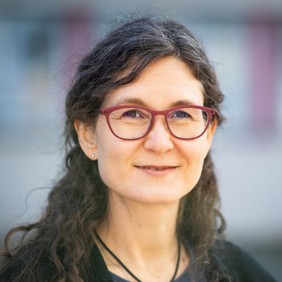
Jana Sillmann
 Wed 4 Nov, 9.00-9.45
Adaptation in the context of cascading impacts and systemic risks
Global warming is amplifying climate-related shocks, such as extreme weather events, that generate cascading and compounding impacts across interconnected sectors and systems. These increasingly systemic risks challenge conventional approaches to climate adaptation, which often focus on managing risks in isolation. This presentation explores how a systemic risk perspective can support more effective adaptation planning and decision-making, highlighting methods to assess interconnected vulnerabilities and strengthen resilience to both current and emerging climate risks.
Jana Sillmann is a professor for climate statistics and climate extremes at the University of Hamburg and senior researcher at CICERO in Oslo, Norway. She is a leading expert in the analysis of climate extremes and their socio-economic impacts across sectors (e.g. health, agriculture, energy and finance) and her current work focuses on systemic risk assessment in context of adaptation to climate change and sustainable development. She has been co-leading activities of the World Climate Research Programme (WCRP) Grand Challenge on Weather and Climate Extremes and the Knowledge Action Network on Emergent Risks and Extreme Events (Risk KAN). She is currently co-chairing the Future Earth General Assembly. She is also Lead Author of Chapter 12 (Climate change information for regional impact and for risk assessment) in the 6th Assessment Report of the Intergovernmental Panel on Climate Change (IPCC AR6) Working Group 1 and Review Editor for the IPCC AR7 WGII Chapter 3 (Current adaptation progress, effectiveness and adequacy).